Home Medical Cache: Building a Family First Aid System (Not Just a Kit)
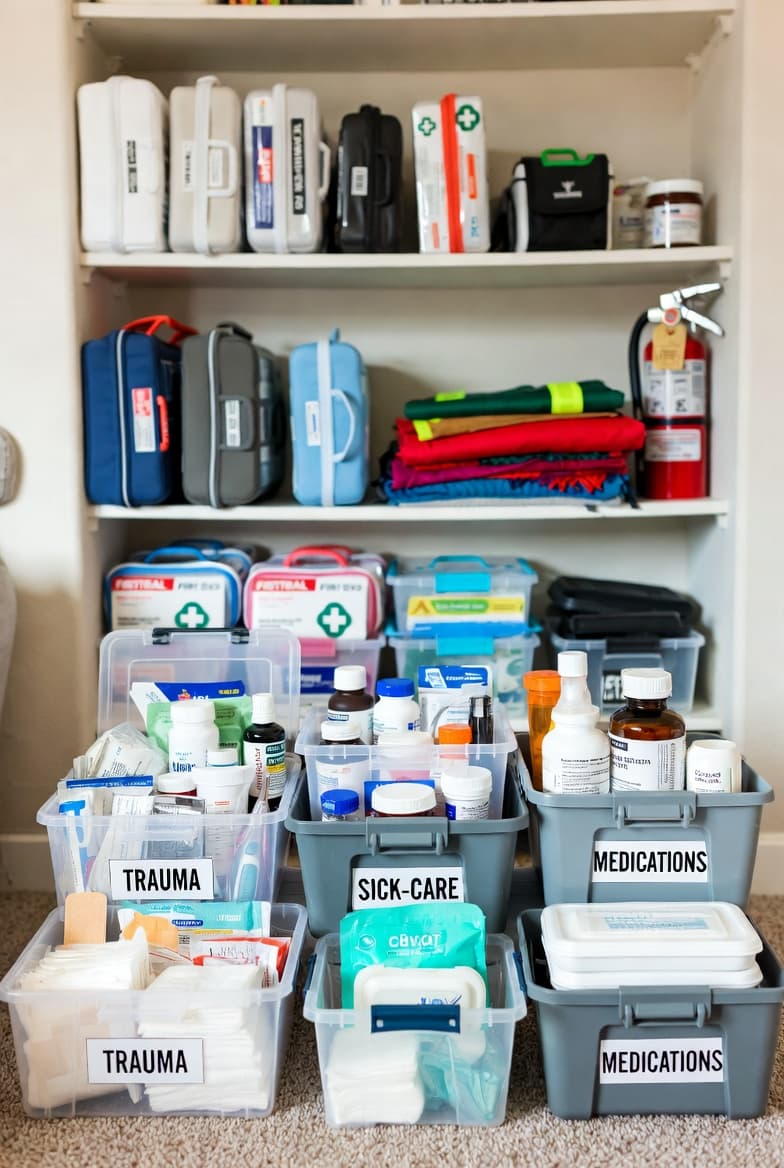
How to stage trauma care, sick-care, and medications so you can respond fast—without digging through junk drawers. Build a reliable home medical system, not just a random first aid kit.
Published 12/22/20257 min read
A first aid kit is better than nothing. But most "kits" fail the first time you actually need them because they're:
- buried under batteries and old receipts
- missing the one item you need (because it got used and never replaced)
- stocked with random band-aids… but no plan for real injuries
A home medical cache is different. It's a simple system: where things live, what's inside, who can find it, and how you replenish it. It's medical preparedness the same way a fire extinguisher is preparedness—you don't want to "figure it out" during the emergency.
This guide shows you how to build a home setup that supports everything from kitchen cuts to severe bleeding to flu week—without turning your house into a clinic.
Disclaimer: This article is not medical training or medical advice. If you want real capability, take a certified first aid/CPR course from the American Red Cross and a Stop the Bleed class (find courses near you at bleedingcontrol.org). In emergencies, call 911 and follow dispatcher instructions.
The Goal: Fast Access + Clear Tiers
Home medical gear works best when it's staged in layers:
- Everyday "boo-boo" care (small injuries happen constantly)
- Trauma response (rare, but time-critical)
- Sick-care (illness, dehydration, stomach bugs, fever)
- Medications & chronic needs (the quiet failure point)
- Documentation + emergency info (saves time when it matters)
If you only do one thing today: separate your "minor stuff" from your trauma gear.
Most people ruin their trauma supplies by grabbing gauze for a scraped knee.
Tier 1: The Daily-Use First Aid Kit (Boo-Boo Kit)
This lives where injuries happen: kitchen + garage + upstairs bathroom (or wherever makes sense).
Keep it simple and frequently replenished:
- Assorted bandages (including knuckle/fingertip)
- Antiseptic wipes
- Sterile gauze pads (small)
- Medical tape
- Tweezers
- Small scissors
- Finger splint (optional but handy)
- Burn gel / burn dressing
- Instant cold pack
- Nitrile gloves
- Saline eye wash or sterile eyewash
Rule: If this kit is used, it gets restocked that day.
No exceptions. That's how systems stay reliable.
Tier 2: The Trauma Kit (Break Glass In Case of Bad Day)
This is not the kit you rummage through for a hangnail. This is for:
- major bleeding
- deep lacerations
- power tool accidents
- severe falls
- car crash at your driveway
- "I need to do something right now while EMS is coming"
Store it high, obvious, and labeled.
A wall-mounted hard case or a clearly marked bag beats a drawer.
Trauma Kit Minimums (Civilian-Realistic)
- 2 proven tourniquets (real ones, not bargain-bin mystery nylon) — Only use if you've taken Stop the Bleed training
- Compressed gauze (for packing or pressure)
- Pressure dressing (Israeli-style or equivalent)
- Chest seals (pair) if you want capability for penetrating trauma (training recommended)
- Nitrile gloves (multiple pairs)
- Trauma shears
- Permanent marker (write tourniquet time, note interventions)
- Emergency blanket / hypothermia wrap
- CPR face shield (low-cost, high-value)
The Trauma Kit Rule
If you open the trauma kit for a minor injury, you will eventually empty it and not notice.
Keep the trauma kit "sacred." Use the boo-boo kit for everything else.
Once your trauma kit is staged, learn how to use it. Our TCCC MARCH Checklist guide breaks down the proven sequence for handling life-threatening injuries—massive hemorrhage, airway, respiration, circulation, and hypothermia prevention. It's the framework that works under stress.
Tier 3: Sick-Care Kit (The "Everyone Got Sick at Once" Problem)
This is the kit that quietly saves you during storms, outages, or supply shortages—because illness is more common than trauma.
Think: fever + hydration + comfort + symptom control.
Suggested basics:
- Digital thermometer (plus spare batteries)
- Oral rehydration salts (ORS) or electrolyte packets
- Anti-diarrheal (know who shouldn't take it)
- Anti-nausea options (OTC where available)
- Fever/pain reducers (acetaminophen / ibuprofen — store responsibly)
- Antihistamine (allergies happen at the worst time)
- Cough drops / throat lozenges
- Humidifier (optional) or saline spray
- A few N95s (smoke, illness, dusty cleanup)
- Disposable emesis bags (underrated)
- Hand sanitizer and disinfecting wipes
Pro tip: During a disruption, dehydration and GI issues can turn "annoying sick" into "urgent" fast—especially for kids and older adults.
Tier 4: Medications & Chronic Needs (Where Most Homes Actually Fail)
This is the part people skip because it's boring—until it isn't.
What to Stage
- A written list of everyone's medications, dosages, and prescribing doctor
- A small buffer of critical meds when possible (work within your legal/medical constraints)
- Spare glasses/contacts
- Inhalers / epi (if prescribed)
- Basic wound-care items that match your household realities (diabetic supplies, etc.)
Storage Rules
- Cool, dry, dark
- Out of reach of children
- Clearly labeled with household member names
- A reminder to rotate before expiration (calendar it)
Tier 5: Emergency Medical Info Card (Most Useful "Tool" in the House)
Make one sheet. Put it in the trauma kit and also on the fridge.
Include:
- Full names + birthdates
- Allergies
- Medications
- Major conditions
- Emergency contacts
- Primary doctor
- Insurance info (optional)
- Address written clearly (yes, really)
- Any special instructions (autism needs, mobility limits, DNR if applicable)
In a panic, people forget things they've known for 20 years. This sheet prevents that.
Where to Store It (So It Actually Gets Used)
Here's a layout that works for most homes:
- Kitchen: Boo-boo kit (most common injury zone)
- Garage/workshop: Boo-boo kit + eye wash + extra gloves
- Hall closet or master bedroom: Trauma kit (primary)
- Upstairs bathroom: Mini boo-boo kit
- Linen closet: Sick-care kit (bigger, bulkier items)
If you have multiple floors, consider a trauma kit on each level—especially if stairs would be hard during a crisis. This becomes even more important during shelter-in-place scenarios when you can't leave your home and need medical supplies accessible throughout the house.
A Simple Response Plan (So You Don't Freeze)
When something serious happens, most people lose 30–60 seconds to confusion. You can shrink that by having a script.
The "Home Trauma Script"
- Make the scene safe (power tools off, pets secured, traffic stopped, etc.)
- Call 911 early (or delegate it: "You—call 911 now.")
- Stop life-threatening bleeding (tourniquet / pressure / packing if trained) — Follow the MARCH sequence if you know it
- Keep them warm (shock and hypothermia are a real combo)
- Document times (tourniquet time, major changes)
- Prepare for handoff (clear a path, unlock door, turn lights on)
That's it. Fast. Simple. Repeatable.
This script aligns with the MARCH framework used by first responders and tactical medics—adapted for home use. The more you practice, the faster you'll move when it matters.
Maintenance: The Part That Makes This Real
Put this on your calendar:
Monthly (5 minutes)
- Check kit locations (did it migrate?)
- Replace used items
- Confirm gloves haven't degraded
Quarterly (10 minutes)
- Check expiration dates (meds, sterile items)
- Test thermometers
- Recount tourniquets and trauma items
Annually
- Replace old, worn items
- Refresh training (CPR certification from American Red Cross or American Heart Association, Stop the Bleed course)
- Update emergency info sheet
Suggested Gear (Home Medical Cache Starter List)
If you're building from scratch, start here:
- 1–2 boo-boo kits (kitchen + garage)
- 1 dedicated trauma kit with 2 tourniquets
- 1 sick-care tote/bin
- Medical info sheet (printed)
You can scale up later. The system matters more than the size.
Final Thoughts
A home medical cache isn't about having the perfect gear—it's about having the right gear in the right place at the right time.
Separate your tiers. Maintain your systems. Practice your response. When something happens, you won't be digging through junk drawers—you'll be reaching for exactly what you need.
This medical system is one piece of a broader home preparedness strategy. For more on securing your home and planning for emergencies, see our Home Emergency Preparedness guide.
Preparedness isn't about fear.
It's about having systems that work when seconds count.
Stay ready.
Get Prepared
Subscribe to get our free 72-hour kit checklist and practical preparedness tips.
